Third grade marks a pivotal year, building foundational skills in math through Common Core Standards, encompassing operations, numbers, geometry, and data.
Overview of Common Core Math in 3rd Grade
Common Core math for third grade focuses on several key areas, building upon earlier learning. Students delve into operations and algebraic thinking, mastering multiplication and division, and recognizing arithmetic patterns. A strong emphasis is placed on number and operations in base ten, including place value, rounding, and multi-digit arithmetic.
Furthermore, students begin exploring fractions as parts of a whole, learning about equivalent fractions and comparison. Measurement and data skills are honed through measuring lengths, understanding time, and interpreting data. Finally, geometry concepts are introduced, focusing on shapes, their attributes, and perimeter/area basics. These standards aim to create a cohesive and rigorous math foundation.
Importance of Understanding the Standards
Understanding 3rd grade Common Core math standards is crucial for students’ future success. These standards provide a clear, consistent framework for math education, ensuring students develop a solid foundation in essential skills. Parents and educators benefit from knowing these expectations, allowing for targeted support and effective teaching.
Mastery of these concepts—like multiplication, division, and fraction understanding—prepares students for more advanced math in later grades. Consistent standards also facilitate smoother transitions between schools and districts. Ultimately, a strong grasp of 3rd grade math empowers students with problem-solving abilities and critical thinking skills vital for academic and real-world applications.
Operations and Algebraic Thinking
This domain focuses on developing fluency with multiplication and division, understanding properties of operations, and identifying arithmetic patterns.
Understanding Multiplication and Division
Third grade students solidify their grasp of multiplication and division, moving beyond rote memorization to conceptual understanding. They learn to represent these operations using various models, including arrays, equal groups, and number lines. A key focus is relating multiplication to repeated addition and division to repeated subtraction.
Students explore the inverse relationship between multiplication and division, recognizing that they are opposite operations. They begin to solve one-step and two-step word problems involving multiplication and division within 100, applying their understanding to real-world scenarios. Fluency with multiplication facts is a significant goal, building a strong foundation for future mathematical concepts. Mastering these skills is crucial for success in later grades.
Properties of Operations (Commutative, Associative, Distributive)
Third graders begin to explore the properties of operations – commutative, associative, and distributive – though formal terminology may be limited. They discover that changing the order of numbers doesn’t alter the result in addition and multiplication (commutative property). They also start to understand how grouping numbers affects calculations (associative property), particularly with addition.
While the distributive property is introduced more formally later, students begin to see how breaking apart numbers can simplify calculations. Identifying arithmetic patterns, like even numbers resulting from multiplying by four, and explaining them using these properties is a core skill. This foundational understanding prepares them for algebraic thinking in future grades, fostering flexibility and efficiency in problem-solving.
Arithmetic Patterns and Properties
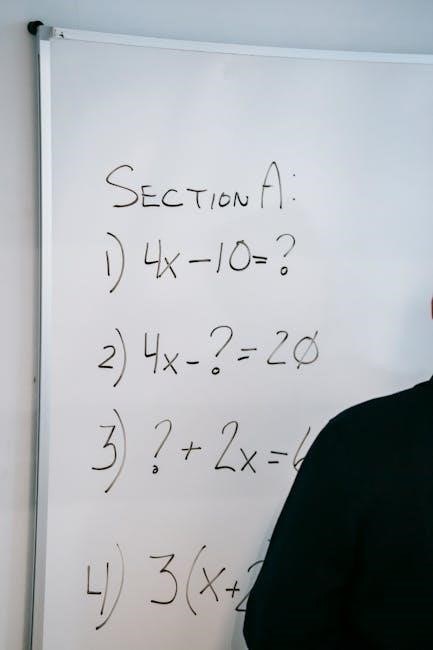
Third grade students delve into recognizing and describing arithmetic patterns, extending them to solve problems. This includes observing patterns within addition and multiplication tables, noticing relationships between numbers, and predicting subsequent terms in a sequence. Understanding that 4 multiplied by any number yields an even result exemplifies this skill.
They learn to explain these patterns by referencing properties of operations, solidifying their grasp of mathematical concepts beyond rote memorization. This exploration fosters a deeper understanding of number relationships and lays the groundwork for more complex mathematical reasoning. Recognizing these patterns builds fluency and confidence in mathematical thinking, preparing them for future algebraic concepts.
Solving Word Problems – Multiplication and Division
A core component of third grade math involves applying multiplication and division skills to solve real-world problems. Students transition from concrete examples to abstract thinking, interpreting word problems and selecting appropriate operations. They learn to represent these situations with equations, demonstrating their understanding of the relationship between operations and problem-solving.
These problems emphasize understanding the meaning of multiplication as repeated addition and division as equal sharing or grouping. Students must determine whether multiplication or division is needed, and accurately interpret the context to arrive at a logical solution. This skill builds critical thinking and reinforces the practical application of mathematical concepts.
Number and Operations in Base Ten
Third graders deepen their place value understanding, mastering multi-digit arithmetic, rounding, and fluently adding/subtracting within 1000 using properties of operations.
Place Value Understanding
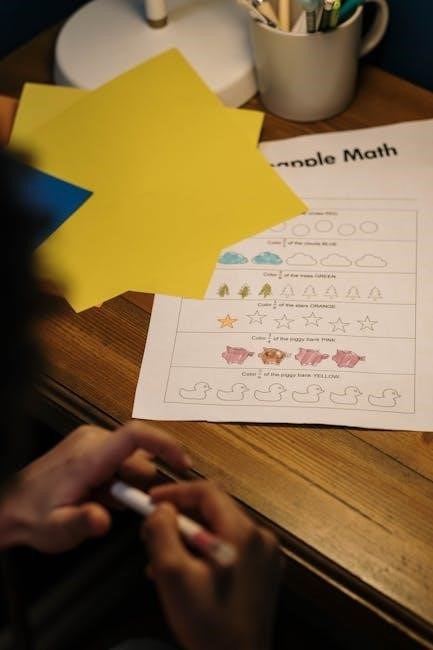
Third grade students solidify their comprehension of place value, extending beyond hundreds to encompass thousands. This involves recognizing that a digit’s position dictates its value – for example, the ‘2’ in 235 represents 200. They learn to decompose numbers into their component parts, understanding 235 as 200 + 30 + 5.
Crucially, students utilize this understanding to compare and order numbers, determining which is greater or lesser based on their place value. They also explore the concept of representing numbers in various forms, including expanded form and word form. This foundational skill is essential for performing multi-digit arithmetic and building a strong number sense, preparing them for more complex mathematical concepts later on.
Rounding Numbers to the Nearest 10 or 100
Third graders develop proficiency in rounding numbers to the nearest 10 and 100, a skill vital for estimating and working with larger numbers. They learn the rules: if the ones digit is 5 or greater, round up; if it’s 4 or less, round down. For example, 67 rounded to the nearest 10 becomes 70, while 132 rounded to the nearest 100 becomes 100.
This isn’t simply memorization; students grasp the concept of finding the closest multiple of 10 or 100. Rounding provides a practical application of place value and helps develop number sense; It’s a crucial skill for mental math and checking the reasonableness of answers in addition and subtraction problems, fostering confidence in their calculations.
Fluently Adding and Subtracting within 1000
Third grade focuses on mastering addition and subtraction within 1000 with speed and accuracy – fluency. Students move beyond basic strategies, employing various methods like composing and decomposing numbers, using properties of operations, and relating addition and subtraction. They solve problems involving regrouping (borrowing and carrying) with increasing confidence.
This fluency isn’t just about getting the right answer; it’s about understanding why the methods work. Students apply these skills to solve real-world problems, demonstrating their ability to reason mathematically. Achieving fluency prepares them for more complex operations and problem-solving in later grades, building a strong numerical foundation.
Multi-Digit Arithmetic
Third graders extend their arithmetic skills to tackle multi-digit problems, building upon place value understanding. They learn to add and subtract numbers with multiple digits, utilizing strategies like decomposition and regrouping to manage the complexity. This involves understanding how numbers are represented and how operations affect each place value.
Students aren’t simply memorizing procedures; they’re applying properties of operations to solve problems efficiently. They connect these skills to real-world scenarios, demonstrating practical application. Mastering multi-digit arithmetic is crucial for future mathematical success, laying the groundwork for more advanced calculations and problem-solving techniques.
Number and Operations – Fractions
Third grade introduces the concept of fractions as parts of a whole, exploring equivalent fractions and comparing them, building a foundational understanding.
Understanding Fractions as Parts of a Whole
Third grade students begin their journey into the world of fractions, initially grasping the fundamental idea that a fraction represents a part of a whole. This involves dividing a whole into equal parts and identifying how many of those parts are being considered.
Students learn to represent fractions visually, using models like fraction circles, fraction bars, and area models. They understand that the denominator indicates the total number of equal parts, while the numerator shows the number of parts being referenced.
A key focus is on recognizing and naming fractions like 1/2, 1/3, 1/4, and so on. They explore how different fractions represent different portions of the same whole, laying the groundwork for more complex fraction concepts later on.
Equivalent Fractions
Building upon the understanding of fractions as parts of a whole, third grade students are introduced to the concept of equivalent fractions. This means understanding that different fractions can represent the same amount, even though they have different numerators and denominators.
Students explore this idea through visual models, comparing fraction strips or circles to identify fractions that cover the same area. For example, they learn that 1/2 is equivalent to 2/4 and 4/8.
The focus isn’t on finding equivalent fractions through complex calculations, but rather on recognizing them visually and understanding the relationship between the numerator and denominator. This foundational skill prepares them for more advanced fraction operations.
Comparing Fractions
Third grade students develop the ability to compare fractions with the same numerator or the same denominator. This skill builds upon their understanding of fractions as numbers and their ability to visualize fraction sizes.
When comparing fractions with the same denominator, students learn that the fraction with the larger numerator is the greater fraction. For instance, 3/8 is greater than 1/8. Conversely, when comparing fractions with the same numerator, the fraction with the smaller denominator is larger – 1/2 is greater than 1/4.
Visual models, like fraction strips or number lines, are crucial for developing this conceptual understanding. Students begin to reason about fraction magnitudes before formal algorithms are introduced.
Measurement and Data
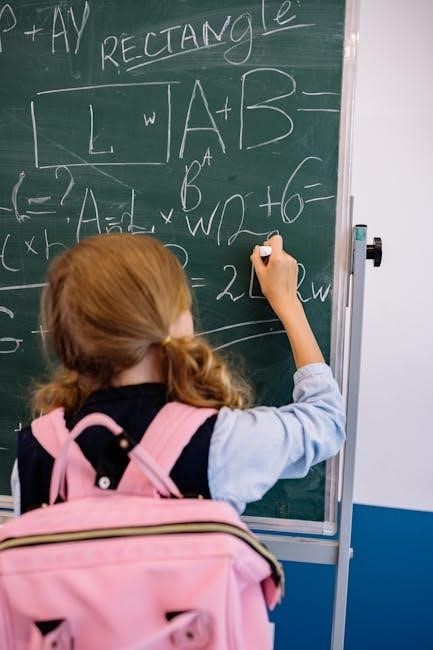
Third graders explore measurement using units for length, time, volume, and mass, while also learning to represent and interpret data.
Measuring Lengths and Estimating
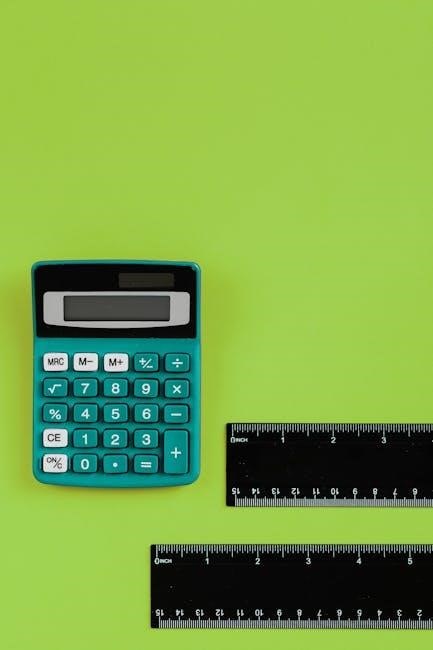
Third grade students delve into the realm of measurement, focusing on accurately measuring lengths using various units – rulers, yardsticks, meter sticks, and tape measures. They aren’t just learning how to measure, but also developing crucial estimation skills. This involves predicting lengths before measuring, then comparing their estimates to the actual measurements, refining their judgment over time.
The Common Core Standards emphasize understanding the relationship between different units, like inches and feet, or centimeters and meters. Students learn to express a length in different units and solve real-world problems involving addition and subtraction of lengths. This builds a strong foundation for future work with more complex measurement concepts and geometric applications.
Time, Liquid Volumes, and Masses
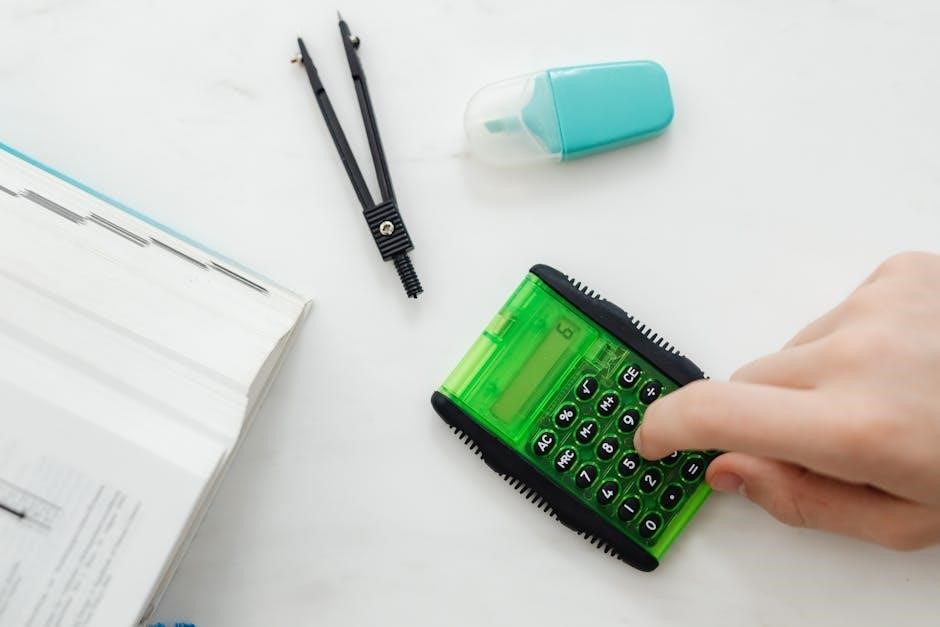
Third graders expand their measurement skills to encompass time, liquid volumes, and masses. They learn to tell and write time to the nearest minute, solving word problems involving addition and subtraction of durations. Understanding units like minutes, hours, and elapsed time becomes central.
Regarding liquids, students estimate and measure volumes using units like cups, pints, and quarts. They also explore masses and weights, using units like grams and kilograms. The Common Core stresses relating these measurements to real-world scenarios, fostering practical application. Students develop skills in estimating, measuring, and comparing these quantities, building a solid foundation for future mathematical concepts.
Representing and Interpreting Data
Third grade students develop skills in representing and interpreting data through various methods. They learn to create scaled picture graphs, bar graphs, and line plots to display data sets. A key focus is understanding how to draw a bar graph to represent a data set with several categories.
Students solve problems using information presented in these graphs, answering questions like “How many more…?” and “How many less…?”. They also learn to generate questions that can be answered by analyzing the data. This builds critical thinking and analytical skills, connecting math to real-world information and fostering data literacy.
Geometry
Third graders explore shapes, analyzing attributes, and partitioning them into parts; they also begin to grasp perimeter and area concepts.
Understanding Shapes and Their Attributes
Third grade geometry focuses on developing a comprehensive understanding of two-dimensional shapes. Students learn to categorize shapes based on their attributes, such as the number of sides and angles. They identify and describe triangles, quadrilaterals, and polygons, recognizing distinctions between different types of each.
Crucially, students aren’t just memorizing names; they’re analyzing why a shape fits into a particular category. They explore concepts like congruence – identifying shapes that are identical even if oriented differently. This foundational work prepares them for more advanced geometric concepts in later grades, building a strong visual and spatial reasoning skillset. Recognizing attributes is key to problem-solving.
Partitioning Shapes into Parts
Third graders extend their geometric understanding by learning to partition shapes into equal parts. This builds a crucial link between geometry and fractions, as partitioning visually represents fractional parts of a whole. Students divide rectangles and circles into specified numbers of equal areas – halves, thirds, fourths, and so on.
They demonstrate understanding by describing the parts using fractions, like “one-fourth” or “two-thirds.” A key focus is recognizing that equal parts must be congruent. This isn’t simply drawing lines; it’s about demonstrating a conceptual grasp of equal area and relating it to fractional representation, setting the stage for future fraction operations.
Perimeter and Area Concepts
Third grade introduces the foundational concepts of perimeter and area, though the focus remains largely conceptual. Students learn that perimeter is the total distance around a two-dimensional shape, measured by adding the lengths of all its sides. They work with whole number side lengths and use units like inches, feet, centimeters, and meters.
Area is introduced as covering the surface of a shape, initially using square units to measure. Students tile rectangles with unit squares to visualize and determine area, understanding that area represents the space inside the shape. Formal formulas aren’t emphasized at this stage; the goal is building intuitive understanding.